



Natural Wood Balm with Tung Oil
Born of nature, made for wood.
Has your wooden chopping board or favourite table lost its shine and started to look dry? Looking for a way to deeply nourish and protect wood without chemical varnishes or synthetic products? You’ve just found the answer.
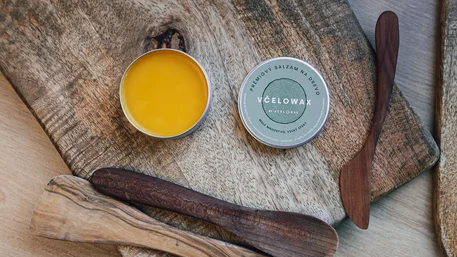
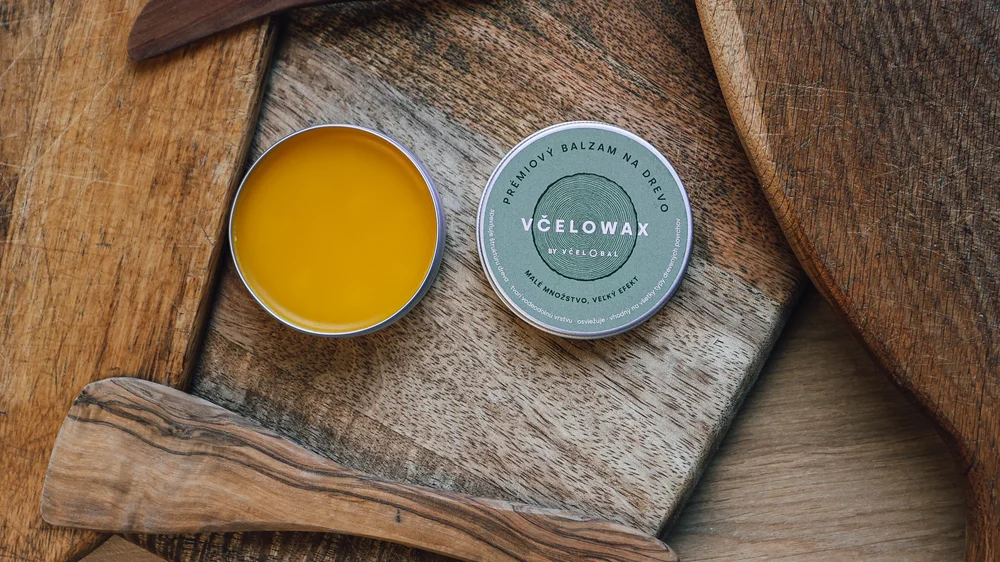
A premium recipe that gives wood all-round care. Our balm, made from beeswax and natural oils, deeply nourishes and protects all wooden surfaces. It leaves a satin sheen and protects wood from moisture.
In this article you’ll learn why a natural wood balm is the best eco-friendly choice for your home and how to use it properly.
💎 The secret of tung oil: top-class durability and strength for wood
Our balm differs from ordinary oils (such as olive or mineral oil) because it contains tung oil, considered the very best for treating wood.
- First-class protection: tung oil doesn’t just soak in – it polymerises (hardens) inside the wood’s structure and becomes part of it. It creates an extremely durable, water-resistant film.
- Deep nourishment and stability: jojoba oil is stable, doesn’t yellow and doesn’t go off, so it gives wood long-lasting deep nourishment.
- Surface protection: beeswax forms a fine satin protective film on the surface and seals the pores.
- Antiseptic scent: Litsea cubeba essential oil also has strong antiseptic and antifungal properties, helping to keep the surface hygienically clean.
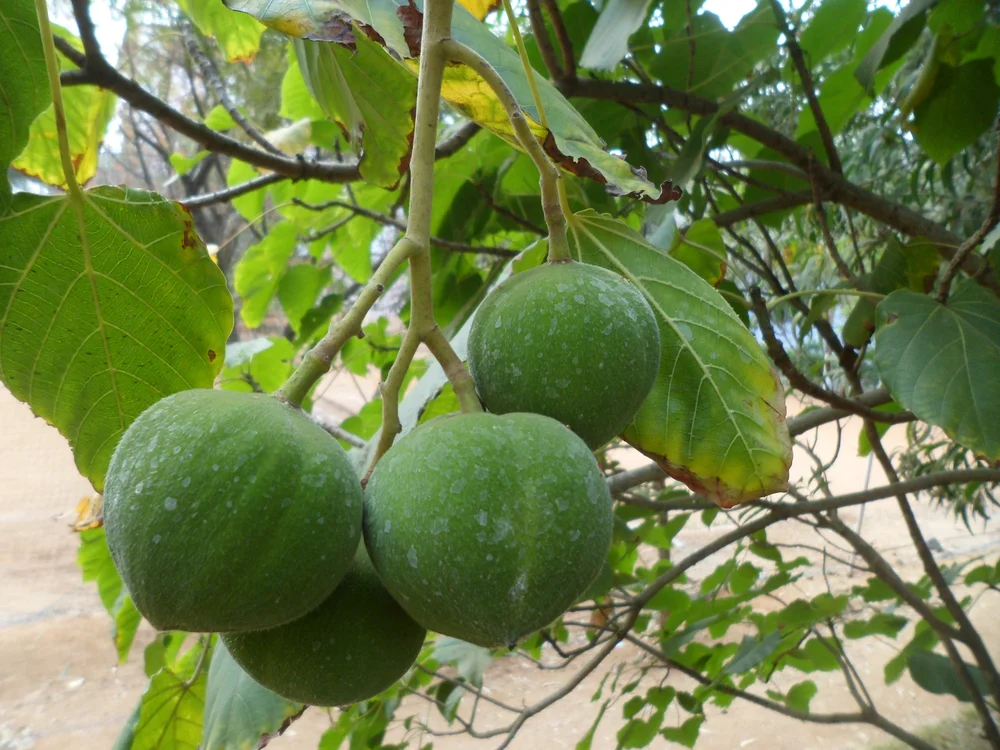 Author: B Saranya – own work, CC BY-SA 3.0, https://commons.wikimedia.org/w/index.php?curid=26228448
🍽️ A balm for the kitchen: safe care for chopping boards
One of the most common kitchen questions is how to treat a wooden chopping board or wooden tableware.
Because our balm contains only natural oils and wax, it is safe for food contact (Food Safe) and ideal for:
- Chopping boards: the balm protects the board from moisture and extends its life.
- Wooden tableware and bowls: once cured, the surface is safe for food contact, making it ideal for bowls and tables.
💡 More ways to use the balm (Toy Safe and restoration)
Thanks to its 100% natural ingredients and safety in contact with saliva, the balm is also great for treating:
- Wooden toys and children’s furniture: it is safe in contact with saliva. The balm protects wood from moisture and prevents splinters.
- Leather goods: a small amount of balm nourishes leather belts or old handbags and restores their suppleness.
- Metal tools: treating metal parts (such as knife handles) creates a protective barrier against rust and moisture.
- Reviving old wood: it brings old, dried-out wood back to life and helps repair scratched furniture by penetrating deep and hydrating the wood fibres.
🛠️ How to use it and long-term wood care
Instructions (application)
- Make sure the wooden surface is clean and dry (ideally sanded with fine sandpaper if it’s badly damaged).
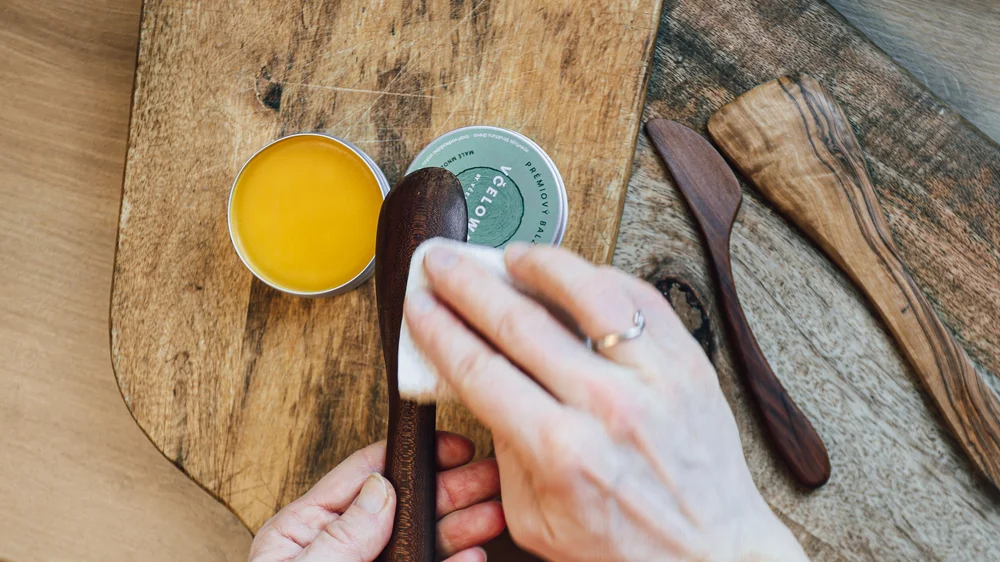
- Apply a thin layer of balm with a sponge, following the grain.
- Leave the balm to soak in for 15–20 minutes.
- Buff with a clean cloth and remove any excess balm. The surface must not feel sticky!
- Let the surface cure for at least 24 hours so the tung oil inside the wood can fully harden.
Care for a long life
- Regularity: treat wooden boards and tableware that you wash often with the balm every month, or whenever the wood looks dry.
- Storage: never leave the board standing in water after washing. Let it dry and store it upright.
- Note: before first use, test the balm on a small, inconspicuous area. Store in a cool, dry place.
✅ Main benefits
Here are 4 key benefits that make our balm unique:
- Double action: it protects the surface (wax) and nourishes from within (oils), extending the life of the wood.
- Extreme durability: thanks to tung oil, it hardens and resists water and stains.
- Safe finish: once cured, the surface is safe for food contact (Food Safe).
- 100% natural: no chemicals, solvents or synthetic substances. Ideal zero waste and eco care.
🎁 A gift idea
A wood balm makes a great practical gift for the home for anyone who loves natural materials and wants to look after them properly.
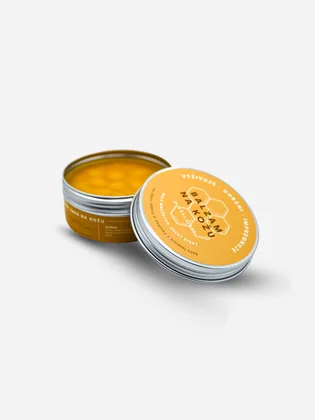
Our wood balm is protection, nourishment and restoration for wooden surfaces in a single tin.