



How to Care for a Wooden Chopping Board and Other Wooden Kitchen Utensils: Three Simple Steps
Why look after wooden spoons and chopping boards? Not just so they last as long as possible. Wood is a living, porous material that easily “soaks up” smells and dirt, and over time bacteria can spread on it. If we neglect it for a long time, the wood dries out and absorbs everything even more easily. Bacteria thrive in any cracks. By the way, a plastic board won’t solve this – it gets scratched too, and unlike wood, plastic has no natural antibacterial properties. So wood is the right choice, it just needs a few minutes of care now and then. Don’t worry, it’s quick!
So how do you do it? Here are three simple steps.
1. First, clean the wood thoroughly.
All you need is ordinary salt and a lemon. Sprinkle the board generously with salt (ideally coarse), squeeze some lemon over it and scrub the whole surface with the cut side of the lemon. The lemon disinfects the wood and the salt draws out built-up grease and smells. Leave it for 15 minutes, rinse with lukewarm water and wipe dry. When the board is completely dry, move on to the next step.
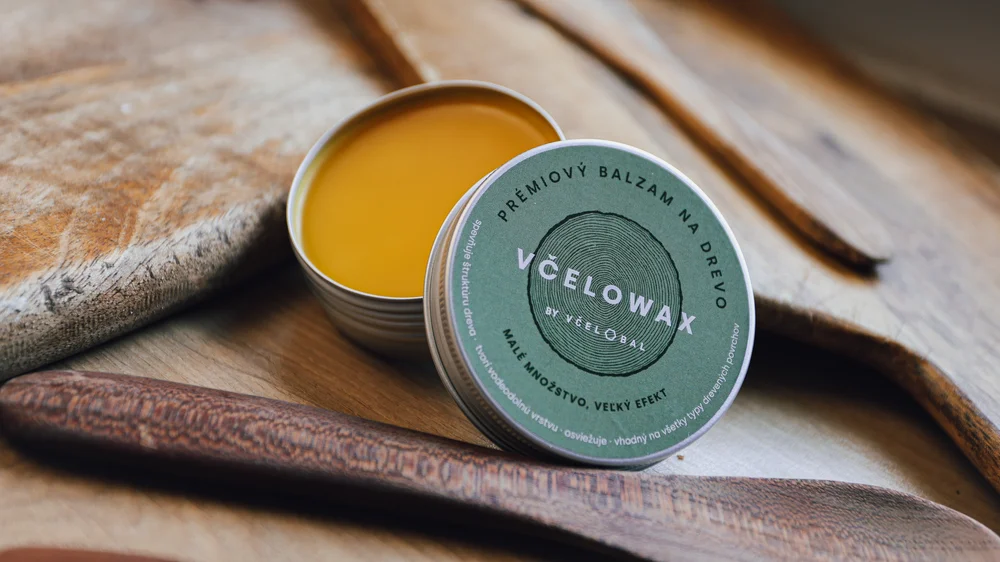
2. Wax the wood.
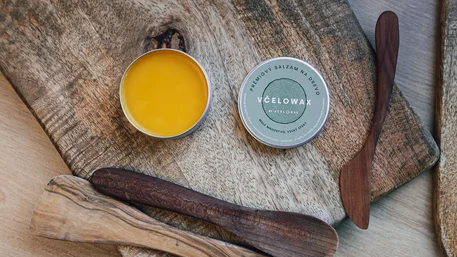
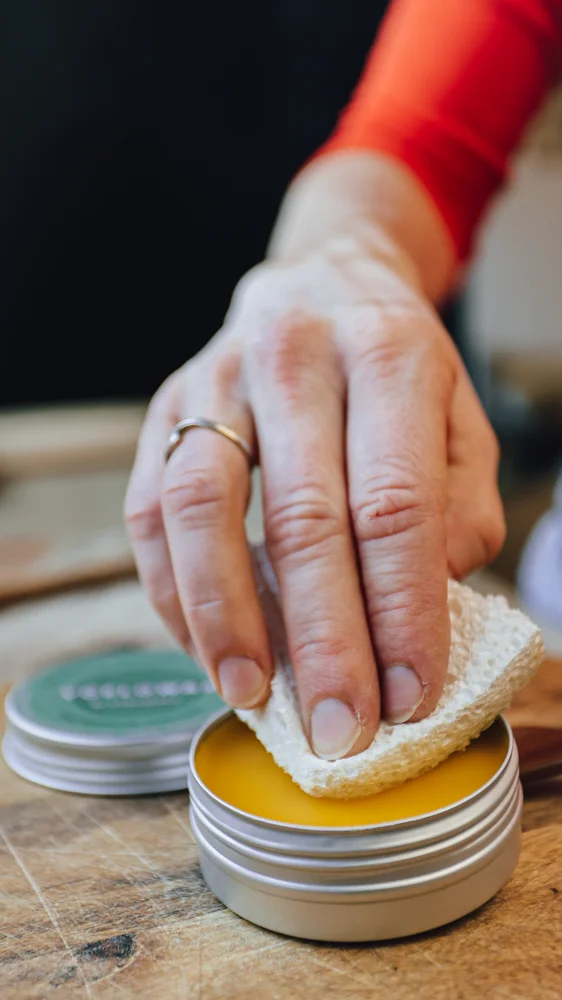
Take a piece of clean sponge or a dry cloth, apply a small amount of wax and rub it over the whole surface of the board or spoon.
Why is beeswax better than oils?
Oil soaks deep into the wood and nourishes it there. That’s great, but it leaves almost nothing on the surface. Beeswax does both. Part of it soaks in (especially when mixed with jojoba), and the rest stays on the surface and forms a protective layer. On top of that, many plant oils (sunflower, rapeseed) go rancid in the wood over time (they oxidise). They start to smell and pass that taste on to your food. Beeswax is stable and doesn’t go rancid.
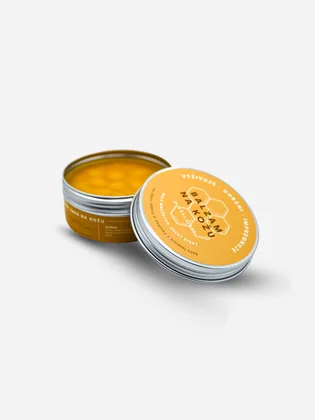
Besides beeswax, our Beeswax Wood Balsam contains:
- Jojoba oil: soaks deep into the fibres and nourishes them from within.
- Tung oil: a natural wonder that hardens inside the wood after application. It creates a tough “shield” that keeps water out even after frequent washing.
- Essential oil: gives the board a fresh scent and has an antibacterial effect.
3. A few tips to make your wood last for years
How should you store wooden boards?
Wood needs air. Don’t leave boards lying flat on a wet worktop – the underside can’t breathe and bacteria multiply. Don’t store them next to the sink, where it’s too damp, and keep them away from radiators and other heat sources. Ideally, keep your chopping boards standing upright against the wall or hanging.
How should you wash wooden boards and spoons?
Wood doesn’t like too much heat. Don’t wash boards in hot water, and above all don’t put them in the dishwasher. After each use, wash the board with lukewarm water, a sponge and washing-up liquid.
How often should you wax wooden boards?
Try this simple test. Drip some water onto the board. If it beads on the surface, the protection is holding. If it soaks in straight away and leaves a dark mark, the wood is “thirsty”. In the kitchen, repeating this ritual about once a month is enough.
What if my chopping board has cracks or old varnish?
All is not lost, it just takes a bit of handiwork. If you need to remove old varnish, start with coarser sandpaper (P80 to P100 grit). For the final smoothing before waxing and for repairing small cracks, use fine sandpaper with P180 to P240 grit.
My tip: a sanding sponge is much more comfortable to use. It sits better in your hand and follows the rounded shapes of spoons nicely. You’ll find one in any DIY store.
Extra tip: always sand along the grain of the wood, never across it. That way you avoid scratches that would only stand out after waxing.
Frequently asked questions (FAQ)
Can I use the balsam on previously varnished wood? Not directly. Wax and oils need to soak into the pores. Old varnish has to be sanded off down to the “healthy” wood first.
What is tung oil and is it safe? Tung oil comes from the nuts of the tung tree. It’s a 100% natural plant oil that is completely safe for food contact once cured. It’s the oldest and best way to waterproof wood naturally.
How long does the balsam take to dry? Because of the tung oil, we recommend leaving the balsam on for at least 30 minutes and then wiping off any excess. The board reaches full mechanical resistance (the tung oil cures) after about 24 hours.
Is it suitable for children’s toys too? Absolutely! The ingredients are so clean that you don’t need to worry if your child puts a wooden teether or toy treated with our balsam in their mouth.
Will the balsam change the taste of my food? Not at all. Tung and jojoba oil have a neutral taste, and beeswax with a hint of essential oil only gently scents your kitchen, not your bread.
So you see, it really isn’t rocket science. Anyone can look after wood, and your boards and tables will thank you by ageing beautifully and perhaps even serving your children one day.